Peter Parker and the Price of Responsibility
7 min read · April 1, 2026
The Origin That Changed Everything
Most superhero origins are about gaining power. Peter Parker's is about what happens when you don't use it. A radioactive spider bite, a burglar he chose not to stop, and then Uncle Ben: gone. That sequence of events is the engine behind every single thing Peter does as Spider-Man.
"With great power comes great responsibility." It's been quoted so many times it risks becoming noise. But read it again in context: this isn't a motivational phrase. It's a lesson learned through grief. Peter didn't choose to be responsible. He learned, the hardest way possible, what irresponsibility costs.
That's not a power fantasy. That's a moral reckoning. And it's what separates Peter Parker from almost every other hero in comics.
The Tragedy of Gwen Stacy
Before Gwen Stacy, superhero comics had an unwritten rule: the hero always saves the day. Then came The Night Gwen Stacy Died (Amazing Spider-Man #121) and that rule shattered.
Peter reached for her. He shot a web. And the whiplash from the catch (or the fall itself, depending on who you ask) killed her. He was there. He was fast enough. He was Spider-Man. And it still wasn't enough.
That moment redefined what superhero storytelling could do. It said that power has limits, that love doesn't protect you from loss, and that even the best of us carry failures we'll never fully set down. Peter Parker has been carrying Gwen ever since.
Peter Parker Is the Point
Here's what a lot of adaptations get wrong: they treat Spider-Man as the identity and Peter Parker as the disguise. It's the other way around. Peter is the point.
Peter is a working-class kid from Queens who can't pay rent, who gets fired, who shows up late, who loves too hard and loses too often. Spider-Man is what he does with all of that. The mask doesn't make him great. He was already great. The mask just gives him a way to act on it without losing himself in the process.
That duality is the richest thing in comics. The tension between Peter's ordinary life and Spider-Man's extraordinary burden is where all the best stories live.
He Always Gets Back Up
What defines Peter Parker across 60+ years of stories isn't his strength or his intelligence, though he has both. It's his persistence. He gets beaten down, publicly humiliated, unmasked, betrayed, broken. And he gets back up. Every time.
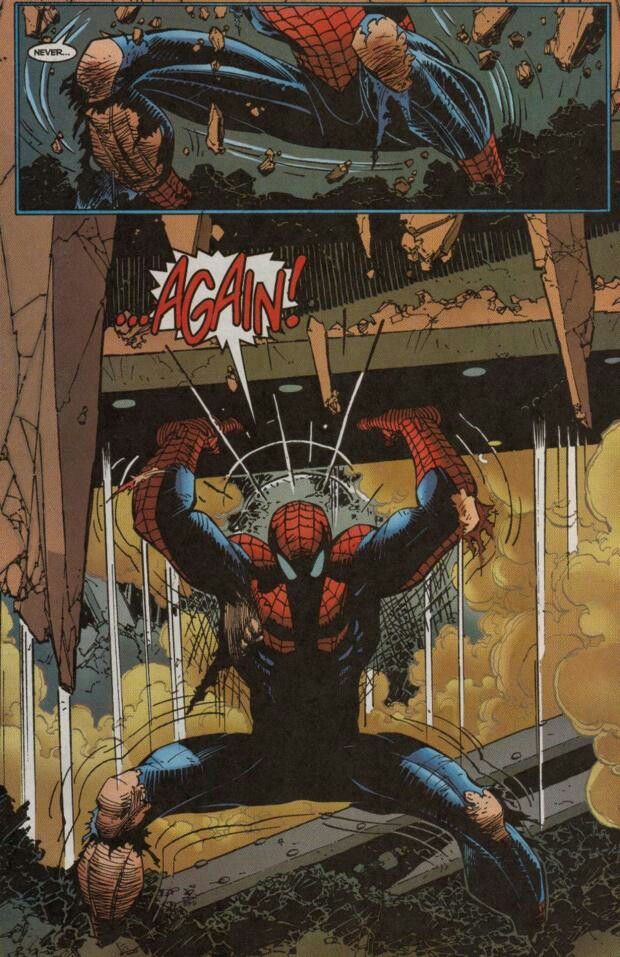
The famous scene where he lifts the machinery off himself in Amazing Spider-Man #33 (buried, alone, out of serum, with May dying above him) is the clearest image of who Peter Parker is. Not a symbol of power. A symbol of will.
He doesn't get back up because it's easy. He gets back up because someone needs him to.
Why He's the Gold Standard
There have been many Spider-Men. Some of them are brilliant. But Peter Parker 616 is the one the others are measured against, because he carries everything that makes the character matter in its purest form.
He's not the strongest, the richest, or the most confident hero in the Marvel universe. He's just the most human. And in a genre built on power fantasies, that humanity is his greatest superpower.
Spider-Man taught me that responsibility isn't a burden you escape. It's a weight you choose to carry because the alternative is unacceptable. Peter Parker has been living that lesson since 1962. He hasn't stopped yet.